

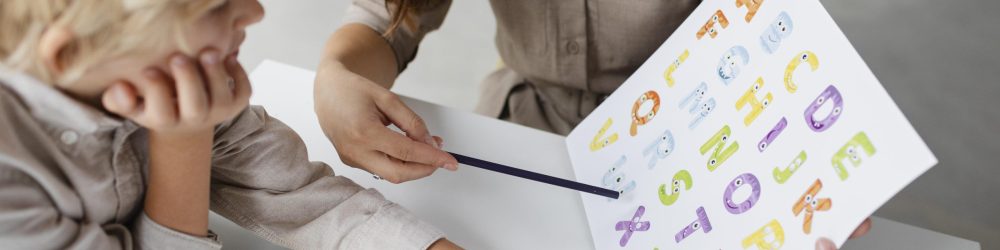
Living with dysorthographia is not always easy.
Between essays marked in red and the fear of being judged, many children lose confidence.
Yet behind every difficulty lies an incredible capacity for adaptation.
Today, more and more adults are sharing their stories to show that success is possible, even with a DYS disorder.
1. Daily Life for a Child with Dysorthographia
From primary school onwards, the signs appear: frequent errors, agreement mistakes, letter reversals…
The child understands, but writes differently.
Every dictation becomes an ordeal, and teasing makes the stress worse.
This is the case of Léonie, 11, who has been seeing a speech therapist for a year.
“I know what I want to write, but my hand can’t keep up.
Before, I was ashamed.
Now I use Dystap, and it helps me learn by playing.”
Thanks to tools like Dystap.io, Léonie practises regularly, at her own pace.
The games stimulate her visual memory and reinforce her automatic skills without stressing her.
2. The Vital Role of the Child’s Circle
Support from family and school is essential.
When parents get involved, the child progresses more quickly.
They can follow the recommendations of AidToi.fr, which offers a free pre-diagnosis and personalised advice to adapt everyday life.
Some parents, initially at a loss, discover that a caring approach makes all the difference.
Encouraging the child, celebrating their successes and giving them suitable tools transforms their relationship with writing.
Gradually, the fear of making mistakes gives way to pride in learning.
3. From Difference to Success
Many adults with dysorthographia describe a path strewn with obstacles, but also with victories.
Mathis, 27, confides: “I was told I wasn’t cut out for studying.
Today, I am a web journalist.
I still use spellcheckers and digital tools, but they no longer define me.”
Digital solutions such as Dystap.io have helped many young people build good habits earlier.
Technological progress is finally making their real abilities visible, well beyond their spelling mistakes.
4. A New Vision of Academic Success
Attitudes are changing: spelling should no longer be the sole criterion for assessment.
Inclusive education now recognises cognitive diversity as an asset.
Learning differently also means learning better.
More and more schools are working with associations and platforms such as AidToi.fr to support DYS pupils.
Trained teachers understand that these children need time, encouragement and personalised strategies.
In Summary
Dysorthographia does not define a destiny; it reveals a different way of learning.
With the right support, suitable tools and a caring environment, every child can find their balance and succeed in their own way.
Today, the goal is no longer to correct at all costs, but to unlock the potential hidden behind the mistakes

