

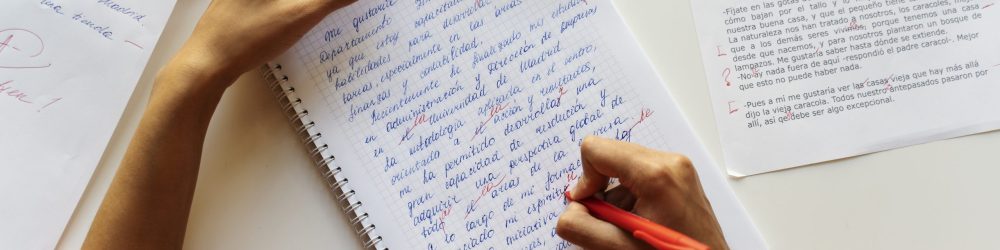
Dictation remains a dreaded exercise for many pupils, and even more so for those with dysorthographia.
Yet it can become an effective learning tool, provided it is rethought.
The aim is no longer the perfect mark, but personalised progress.
1. Understanding the block when faced with dictation
A child with dysorthographia finds it difficult to memorise the spelling of words.
Their brain retains the meaning, but not necessarily the written structure.
The result: they confuse letters, forget endings or reverse sounds.
Traditional dictations heighten this stress and do not allow progress to be recognised.
The method therefore needs to be revised to make this exercise motivating and rewarding.
2. Reducing the cognitive load
First rule: lighten the dictation.
Rather than a long text, opt for short, targeted sentences.
Focus on a specific goal: plural agreements, homophones, or verbs in the present tense.
The child gains understanding and can measure their successes.
Using a visual or auditory aid also helps: listening to the sentence before copying it, on a tablet or computer.
Tools such as Dystap.io allow this type of gradual practice, adapting the level of difficulty to each session.
3. Introducing active dictations
Dictations should not always be something merely ‘endured’.
They can be made participatory:
- Multiple-choice dictation: the child selects the correct spelling from three options.
- Negotiated dictation: the proposals of several pupils are compared to understand the errors.
- Self-correcting dictation: the child rereads with a colour code and corrects independently, with the help of a guide.
These formats reduce the fear of making mistakes and promote memorisation.
4. Drawing on visual and auditory memory
Every child learns differently.
Some memorise better by hearing sounds, others by seeing written words.
The ideal is to combine the two.
Interactive dictation applications, such as those presented on AidToi.fr, often offer these options: listening, typing, then visual review.
Writing in colour (for example, endings in blue) further strengthens visual memory.
Spaced repetition — at regular intervals — consolidates learning over the long term.
5. Correcting differently
Correction should reward effort, not punish mistakes.
Show the child what they have achieved, then highlight one or two areas for improvement at most.
The idea: progress little by little without discouragement.
On AidToi.fr, you will find simple, printable model tracking sheets.
They make it possible to observe progress from one week to the next.
In conclusion
Adapting dictation for a child with dysorthographia means changing the philosophy of the exercise.
Less assessment, more understanding.
Less stress, more success.
Thanks to digital tools and a supportive teaching approach, dictation becomes what it should always have been: an active and motivating learning experience.

