

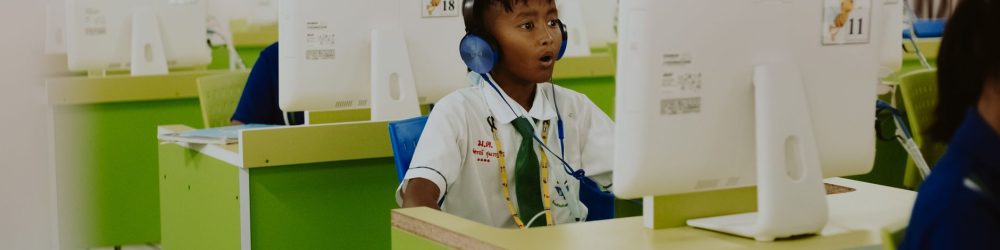
Writing is a mountain to climb for children with dysorthographia. Every letter takes effort, every word is a doubt. And what if simply speaking, then letting the writing happen, changed everything? Voice dictation is not a crutch, it is an open door to free expression.
What is voice dictation and why does it work for dysorthographia?
Voice dictation is simple: you speak, and the device transcribes your words into text. For someone with dysorthographia, it is revolutionary. Why? Because spelling is not an entry barrier. Ideas arrive directly, without a spelling filter.
The child with dysorthographia often fears writing badly. This fear blocks creativity and slows thinking. With voice dictation, they can finally write as fast as they think. It is an emotional liberation before it is a practical gain.
The secret of its effectiveness: it separates two distinct skills. Speaking (easy) from expressing ideas. Writing letters correctly is a whole different challenge. With voice dictation, one can do the first, then improve the second. It is an intelligent ordering of tasks.
The real strengths of voice dictation in everyday life
Saving time and regaining confidence
A child with dysorthographia takes twice as long to write an assignment as a classmate. Their hand tires, and so does their morale. With voice dictation, this delay drastically decreases. Energy goes into the content, not the transcription.
Above all, the child finishes their work. They no longer give up halfway through. This small daily victory strengthens self-esteem. The tool becomes a psychological ally before it is a technical one.
Freedom of creative expression
Children with dysorthographia are often full of ideas. But writing smothers them. With voice dictation, their creativity has no brake. They tell stories and explain concepts without wondering how to spell “consciously”.
This freedom creates a virtuous circle: the more they express themselves, the more they progress naturally. Because they also learn by listening, by revising their text.
Discreet accessibility in class
Contrary to popular belief, using voice dictation at school does not attract mockery. It has become commonplace: almost everyone dictates a message on their phone. The child with dysorthographia no longer feels “different”; they simply use a tool, just as a classmate uses a rollerball pen.
The most effective apps and tools
Google Docs: the classic for home and school
Google Docs offers free and reliable voice typing. The child logs in from a browser, opens a document, and uses the voice command. No specialised software needed. The text appears in real time; they can reread it, correct it, and share it immediately with their teacher.
The advantage: it is free, accessible everywhere, and corrections are saved automatically. For a child with dysorthographia who fears losing their work, this is crucial.
Native Windows and Apple voice dictation
All modern computers have built-in voice dictation. On Windows, via the Dictate app; on Mac and iPad, via native dictation. No subscription, no complicated installation.
These tools are often overlooked, yet very reliable. They recognise French accents and improve with use. For the dysorthographic pupil, it is a minimalist and robust solution.
Dragon NaturallySpeaking: for advanced needs
This professional application goes further. It learns to recognise the user’s specific voice and adapts its dictionary. For a child whose dysorthographia comes with other language difficulties, it is a precise gain.
It costs a little, but it may be reimbursed by the MDPH as part of a personalised schooling project (PPS).
Integrating voice dictation without making it a barrier
Starting gradually
Starting voice dictation all at once can be intimidating. It is better to start small: a text message to a friend, then a paragraph of an assignment. The child gets used to the tool, sees the benefits, then adopts it naturally.
Preparing “voice drafts”
Before writing a full assignment, the child can “brainstorm” aloud. They dictate their ideas in no particular order, then organise them. It is an excellent strategy for structuring thought, particularly useful for dysorthographic pupils who often confuse form and substance.
Reviewing and correcting afterwards
Voice dictation is not perfect. It adds odd commas and confuses “et” and “et” (the homophone). The child must reread and correct. This is normal and formative: they look at their text with fresh eyes, learn from their mistakes, and gradually improve their spelling.
This review step is crucial. Without it, voice dictation becomes a crutch that slows progress. With it, it is a springboard.
Dysorthographia and learning: how voice dictation changes the dynamics
One of the big challenges with dysorthographia is that it mentally exhausts the child. Every line demands intense concentration. By the end of the assignment, they are emotionally drained, and they retain little of the content.
With voice dictation, the child gains stamina and calm. They can focus on what they are saying and on the quality of their ideas, not on the letters. This simple shift changes everything: homework becomes less of a chore and more of a creation.
And here is a secret: children who use voice dictation often discover hidden talents in writing. Because they have never been able to fully express themselves before, and the technology allows them to.
Realistic limits to be aware of
Voice dictation ≠ the end of dysorthographia
Let’s be clear: digital tools alone are not enough to make progress in spelling. Voice dictation helps work around the daily problem, but it does not cure dysorthographia. The child remains dysorthographic; they simply write with more peace of mind.
The real work (with a speech and language therapist, at home, in class) continues. Voice dictation is a facilitator, not a miracle solution.
Accent and background noise
Does your child have a strong regional accent? Voice dictation may not recognise it well at first. Similarly, in a noisy classroom, it struggles. These limits are real, but they improve with software updates and the device learning.
Beware of excessive dependence
Some children, relieved of pressure, forget that handwriting remains important. They no longer try to write on their own. This is a trap: voice dictation should be a transition tool, not a permanent escape from difficulty.
Voice dictation at school: how to talk about it with teachers
Schools can be reluctant. Some teachers fear that voice dictation is a form of cheating, or that it “helps too much”. This fear is unfounded, but it exists.
To convince them:
- Document how the tool is used: not to avoid learning, but to avoid being paralysed by spelling.
- Offer a demonstration: the teacher will see that the child reviews and corrects, and so actually learns.
- Include the speech and language therapist or the MDPH in the discussion. An official document legitimises the adjustment.
- Stress the gain: more energy for the substance, better understanding of the concepts taught.
Most schools accept voice dictation, especially if it is framed by a PPS or a personalised support plan.
Frequently asked questions
Will voice dictation stop my child from learning spelling?
No. Voice dictation helps write without stress, but it does not replace learning. The child still sees the written words, reads them, and corrects them. They learn differently, not less. It is an educational tool, not a magic shortcut.
What is the best time to start using voice dictation?
As soon as the child with dysorthographia starts writing longer texts (around CE2–CM1). The earlier it is used, the more natural it becomes. Conversely, waiting too long reinforces the child’s anxiety and bad habits (writing badly quickly).
Does voice dictation work just as well for the brevet or bac exams?
Yes, if it is officially arranged in the MDPH file and accepted by the rectorate. Many students with dysorthographia benefit from this adjustment on the day of the exam. It is a right, not a favour.
Going further
Fédération Française des Dys (FFDys): find comprehensive guides on suitable technologies, school rights and support for children with dysorthographia. A very good starting point for families.
MDPH (Maison Départementale des Personnes Handicapées): contact your local MDPH to explore entitlements to adjustments (including voice dictation) and possible funding for assistive tools.
Haute Autorité de Santé (HAS): its recommendations on dysorthographia outline the role of assistive technologies and digital tools within a structured care pathway with a speech and language therapist.

