

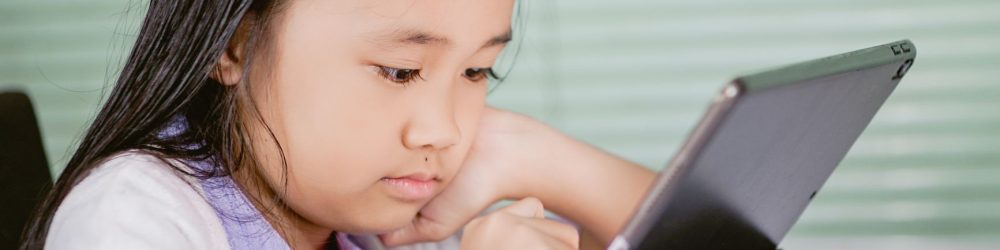
Parents of dysorthographic children often dream of a miracle solution: an app that would correct everything automatically, turning every piece of homework into a flawless text. Intelligent spelling checkers abound in app stores: Antidote, LanguageTool, Grammarly… But here’s the catch: believing these tools are enough can become the worst trap for learning. One must not confuse making writing easier with making progress in spelling. These two paths do not lead to the same place.
The false security of automatic correctors
A dysorthographic child who uses a spelling checker without really understanding their mistakes does not progress. They gain comfort, yes. They produce more readable texts, of course. But their brain memorises nothing. It’s like handing all the calculations over to a calculator without learning times tables: you don’t become a mathematician.
Here is what really happens:
- The child types their homework carelessly.
- The app corrects it automatically.
- The final text looks perfect.
- The parent smiles, relieved.
- The child hands in the homework.
- Three months later, they will write exactly the same mistakes in a dictation.
Why? Because learning spelling requires confronting one’s error, understanding it and correcting it oneself (with help, of course). The automatic corrector short-circuits this crucial process. It is a cognitive bypass, not a treatment.
The hidden limits of ‘intelligent’ apps
Correctors do not do everything. Far from it. Even the most sophisticated ones, such as Antidote or Grammarly
still make mistakes, in particular:
- Homophones: ‘a’ vs ‘à’, ‘ou’ vs ‘où’. AI understands context better than before, but it still gets things wrong. A dysorthographic child will never learn the explanation.
- Complex agreements: past participles, agreements in noun phrases with expansions… Apps hesitate, and so do children.
- Stylistic nuances: a text that is ‘correct’ according to the corrector may be awkward or unnatural.
- Rare cases: apps rely on statistics. They excel on the main current of the river and fail on the tributaries.
Above all, no app diagnoses why the child made a mistake. Was it a lapse of attention? A genuine spelling confusion? A phonological problem? A lack of knowledge of the rule? The app erases the error. It does not resolve it.
The danger of cognitive letting go
Another major trap: when a child knows that an app ‘will take care of’ them, they stop paying attention to their mistakes. They type faster and less consciously. They mentally hand over the correction to the machine. This is the trap of false comfort.
Worse still, some children develop a kind of psychological dependence. They refuse to write without the app. A tool that was meant to liberate becomes a permanent crutch. And in the classroom, no crutches are allowed in exams.
How to use apps sensibly
This does not mean rejecting spelling checkers. Quite the opposite. But using them sensibly means:
1. Correct first, then apply the app afterwards
The child writes their homework. They reread it and try to correct their mistakes. Then the app steps in as a final checker, not as a ghostwriter. At this point, they can observe what they missed. This is where learning happens.
2. Always investigate the suggested corrections
‘Why did the app change that? What is the rule?’ Asking this question every time a correction is made turns the tool into a tutor rather than an automatic cleaner. You can also quickly consult a Bescherelle or watch a YouTube tutorial together.
3. Keep the tools for real work, not for exercises
An app is perfect for polishing a text before publishing or sending it. It has no place in a school learning exercise. The exercise is precisely the moment when errors should surface and be dealt with.
4. Limit use to preserve vigilance
If the child uses the app every day for all their homework, their brain ‘switches off’. Set some rules: the app for long compositions, not for gap-filling exercises. The app on request, not by default.
Apps that do better than correct
Fortunately, not all digital tools are equal. Some go beyond simple correction. For example, platforms such as dys’tap.io offer educational games specially designed for children who struggle, combining fun and structured learning. These games do not bypass learning; they make it engaging and progressive.
Other tools focus on visualising and understanding rules rather than on brute-force correction:
- Dictapoche: to visualise phonetic sequences and understand how words are built.
- PHOEMO: an educational game focused on phonemes and speech and language therapy.
- ‘Explanation’ apps: which ask the child to justify their choices before proposing a solution.
The importance of not replacing the human element
Let us remember: a dysorthographic child needs human support, such as a speech and language therapist, an involved parent, and a teacher who understands their difficulties. When the speech and language therapist alone is not enough, a genuine collective strategy is needed, in which everyone plays their part.
Apps, for their part, remain assistive tools. They replace neither speech and language therapy rehabilitation, nor family commitment, nor educational adjustments at school. Anyone who genuinely believes that an app will ‘repair’ dysorthographia is badly mistaken.
Why you should not feel guilty about using an app
Please note: this text does not say ‘never use a spelling checker’. Quite the opposite. The professional world uses Antidote, Word and Grammarly. A dysorthographic teenager who learns to make the most of these tools without becoming dependent on them gains a genuine skill for the future.
What matters is awareness: the child must know that the app helps them but does not replace them. And parents must understand that making it easier to produce a correct text never means making progress in spelling. These are two different dimensions, and confusing them is the real mistake.
How to reward progress, not just the final result
With a dysorthographic child, praise their personal correction process, not just the perfect final text. ‘You corrected three mistakes all by yourself, well done!’ is a thousand times more motivating than ‘Luckily the app sorted that out’. The first message says ‘You can make progress’. The second says ‘You can’t do anything on your own’.
This is also where highlighting your child’s hidden strengths comes in, through how the use of tools is framed. The tool should serve autonomy, not undermine it.
Frequently asked questions
Is Antidote enough to correct dysorthographia?
No. Antidote is an excellent checker, but it does not replace learning. A child who systematically corrects with Antidote without understanding their mistakes will not improve their spelling in a dictation or in a piece of writing done without a tool. Use it as a final check, not as a first step.
Can a correction app be used at school?
Rarely allowed in exams and tests. However, for homework, it is a useful resource. Ideally, the child understands that there are two contexts: the school exercise (where they must manage on their own) and the final production (where the tool can help). This distinction strengthens metacognitive awareness.
My child refuses to write without automatic correction. What should I do?
This is a sign of psychological dependence. Gradually limit access to the app. Suggest other strategies: rereading with an adult, displaying memory aids, engaging spelling games. A child who regains confidence in their own ability to correct will become independent again when facing the keyboard.
To find out more
- Fédération Française des DYS: resources on monitoring dysorthographia and the role of digital tools in compensation, not exclusive correction.
- INSERM: scientific documents on the mechanisms of spelling acquisition and the real impact of assistive technologies.
- MDPH (Maison Départementale des Personnes Handicapées): to explore legitimate school adjustments, including access to certain digital tools recognised as educational adaptations, distinct from ‘automatic correction’.

