

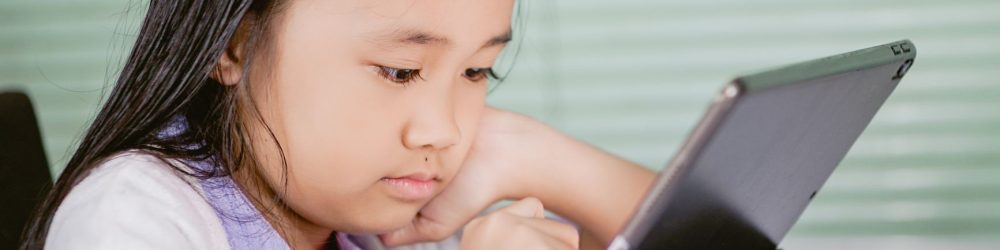
Dysorthographia should not be an insurmountable barrier when it comes to writing. Thanks to technological innovations and educational apps, there are now concrete, engaging solutions for progressing at one’s own pace. These digital tools make learning spelling more accessible, fun and motivating.
Why digital tools are useful for dysorthographia
People with dysorthographia encounter specific difficulties in acquiring and automating spelling rules. Digital applications offer several unique advantages to support this learning:
- Personalised adaptation: the tools adjust to each person’s level and pace, without group pressure.
- Immediate feedback: the child or adult receives instant correction, which helps memorisation.
- Gamification: games make regular practice more appealing and motivating.
- Progress tracking: statistics make it possible to see improvements and maintain motivation.
- Multisensory learning: images, sounds and touch interactions enrich understanding.
These features compensate for certain gaps in traditional learning and respect the cognitive profile of people with dysorthographia.
Leading apps for working on spelling
Dys’tap.io: the educational game designed for DYS children
Dys’tap.io is an innovative platform specifically designed for children with learning disorders, including dysorthographia. Its fun and supportive approach makes it a valuable ally:
- Games adapted to each child’s profile, with automatic difficulty adjustment.
- A clean interface, free from unnecessary distractions, ideal for children with attention difficulties.
- Visible progress and motivating rewards (badges, points).
- Evolving content covering lexical and grammatical spelling.
This application is an excellent first step for dysorthographic children to build confidence in their ability to learn.
Other complementary apps
Bescherelle (digital version) remains an essential resource: easy access to verb conjugations, grammar rules and spelling lists. It can be consulted quickly and without judgement.
Orthophile offers progressive exercises on common spelling rules. Its advantage: it targets the errors most frequently made by people with dysorthographia.
Les Incollables (mobile version) alternates fun challenges with learning. Less specialised, but it works well as a playful complement.
Antidote (dictionary and proofreader) is particularly useful for adults with dysorthographia in a professional context. It explains the errors detected, which gradually enriches knowledge.
Tools to help with writing and proofreading
Beyond pure practice games, certain tools make everyday written communication easier:
Advanced AI proofreaders such as Grammarly (limited French version) or Reverso detect spelling and grammatical errors and suggest alternatives. For a person with dysorthographia, this reduces anxiety about writing and makes it possible to focus on the idea rather than the form.
Interactive digital dictionaries (Larousse, Littré online) offer quick access, often with audio pronunciation. This helps reinforce spelling memorisation through other sensory channels.
Text-to-speech readers built into web browsers or operating systems (audio reading of written text) allow checking by ear, an effective strategy for spotting inconsistencies.
How to integrate these tools into a learning routine
Effectiveness depends on regularity and adaptation to each individual. Here are some recommendations:
- Set realistic goals: 15 to 20 minutes a day of educational play is more beneficial than occasional long sessions.
- Vary the tools: alternate pure play, exercises and active correction to maintain interest.
- Involve the child or adult: letting them choose the tool or game increases intrinsic motivation.
- Combine digital and paper: digital tools complement traditional learning without replacing it.
- Monitor progress: check the statistics to adjust and celebrate small victories.
- Work with a professional if needed: speech and language therapist (orthophoniste) or specialist teacher to validate the strategy.
Emerging innovations in support
Research and educational start-ups are proposing ever more sophisticated solutions. The following are emerging:
Adaptive artificial intelligence: algorithms that learn from every interaction of the user and adjust the content in real time. This means that the more the child plays, the more the application “gets to know” them and becomes effective for them.
Augmented reality for spelling: some applications are beginning to use AR to create immersive environments in which the child must correct or write correctly in order to progress through an adventure.
Online communities: secure spaces where children and adults with dysorthographia share their tips, celebrate their successes and encourage one another without fear of judgement.
Limitations and points to watch
It is important to have a realistic view: digital tools do not replace human support and a holistic approach. A few points of attention:
- Applications alone are not enough: they must be part of a broader strategy (remedial therapy, support, a favourable environment).
- Screen time should remain supervised, especially for children.
- Not all applications suit everyone: it is important to test and adapt.
- Dysorthographia can coexist with other disorders: some children need additional support (adapted layout, specialist font, etc.).
Valuing everyone’s strengths
People with dysorthographia are not “less intelligent” or “less capable”. They learn differently and benefit from different approaches. Digital tools often put them in a position of success, which strengthens their confidence in their abilities.
Many people with dysorthographia excel in other areas: creativity, problem-solving, oral communication, spatial thinking. Digital tools allow them to progress in spelling without sacrificing these natural talents.
To find out more
Ameli.fr (French national health insurance): to understand the funding and support available, including speech and language therapy (rééducation orthophonique).
Fédération Française des Associations de Dyslexie et des Troubles spécifiques de l’Apprentissage (FFDys): resources, guides and recommendations for families affected by DYS disorders, including dysorthographia.
Maison Départementale des Personnes Handicapées (MDPH): to find out about suitable support, school accommodations and specific rights for dysorthographic children.

