

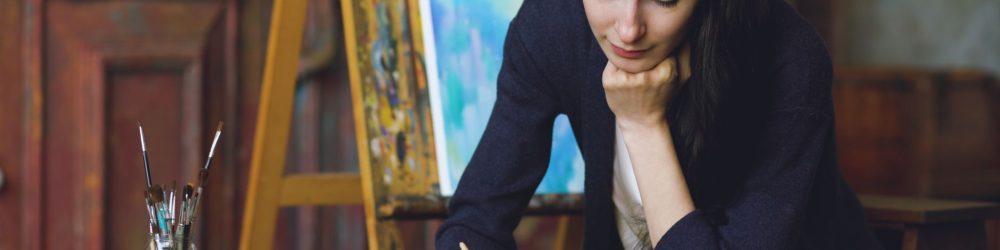
The idea that dysorthographia is an unavoidable obstacle to professional and creative success is deeply rooted. Yet world-renowned artists live with this neurological characteristic every day, and it has never limited the expression of their talent. How have these creative people built their success despite their spelling difficulties? What lessons can we draw for children and adults with dysorthographia today?
When dysorthographia accompanies the greatest creatives
Dysorthographia is a persistent spelling disorder, characterised by difficulties in mastering grammatical rules and in remembering the correct spelling of words, even after appropriate instruction. Contrary to what one might believe, this disorder does not affect intelligence or creative capacity. Several high-profile artists bear witness to this.
Salma Hayek, the Mexican-Lebanese actress and producer, has spoken publicly about her dysorthographia in English. Despite this difficulty with the written language, she has built an exceptional career in film, becoming one of the most influential Hispanic actresses in Hollywood. Her testimony shows that writing is not the core of every professional talent.
In music, several well-known artists live with dysorthographia every day. These musicians have developed a particular relationship with expression: rather than through the written word, their creativity is expressed through sound, melodies and performance. Their spelling difficulties have never prevented them from communicating worldwide through their art.
In film too, dysorthographic actors and directors have left their mark on the industry. Their success rests on skills very different from spelling mastery: the ability to embody a role, to lead a team, to tell a visual story.
The creative strengths of dysorthographia
It is important to note that dysorthographia is not an absence of talent, but a difference in the way written information is processed. Neurological research shows that dysorthographic brains function differently, often with impressive compensatory strengths.
Here is what dysorthographic artists often develop naturally:
- Unbridled creativity: free from the rigid constraints of grammar, the imagination can explore new paths.
- A dominant visual or auditory way of thinking: these artists think in images or sounds before searching for words.
- Remarkable adaptability: faced with obstacles, they develop alternative and innovative solutions.
- Heightened empathy: having experienced specific difficulties often creates a particular sensitivity, useful in dramatic roles or artistic creations.
- Forged perseverance: overcoming a challenge such as dysorthographia builds a valuable resilience.
Dysorthographia and digital tools: a revolution for creatives
A key element in the success of modern dysorthographic artists is access to digital tools. Spell checkers, word predictors and AI assistants have transformed the professional daily life of many creatives. An actress can review her contracts without stress, a musician can write his credits without fear, a director can draft his shooting notes efficiently.
These tools do not replace talent, they free it. They remove an administrative barrier to make room for authentic expression. This is exactly the kind of support that all dysorthographic people deserve, children and adults alike.
What the journey of these artists teaches us
The paths of world-renowned dysorthographic artists send a powerful message: your neurological difference is not a limit to your potential. Here is what we can take away:
1. Identify your main strength
Salma Hayek did not choose a career based on written mastery of English. She chose film, where her presence, her voice and her ability to embody roles spoke far louder than spelling. Likewise, dysorthographic children benefit from exploring what they do naturally well, rather than struggling with what costs them effort.
2. Accept your support tools without guilt
Successful artists know how to use the spell checker, a personal assistant or collaborators to help them with written work. This is not cheating: it is strategy. Our children also deserve this permission to use the tools that work for them.
3. Separate spelling from intelligence and talent
When a dysorthographic celebrity succeeds, the media rarely say: ‘Despite her spelling impairment, she succeeded.’ No, they simply recognise her talent. Why is it different at school for our children? Dysorthographia at school: why French grades do not reflect intelligence is a question every parent and educator should ask themselves.
4. Recognise hidden talents
A dysorthographic child can be a brilliant strategist, an extraordinary visual thinker, a natural musician or a charismatic leader. These talents do not always show up on a spelling test. To learn to see them, reading Dysorthographia: how to highlight your child’s hidden strengths can transform the way you view written difficulties.
Beyond the myth of the dysorthographic genius
It is important not to fall into the opposite trap: claiming that ‘all dysorthographic people are hidden creatives’ would be just as reductive as the reverse. Everyone has their strengths and weaknesses. Some dysorthographic people dream of a scientific, medical or administrative career, and that is entirely valid.
What dysorthographic artists show us is that there are many paths to success and fulfilment. Spelling is only one aspect, and rarely the most important over the long term.
Building a supportive environment
What can we do, as parents, educators or professionals, so that every dysorthographic person has the chance to discover and develop their own talents, as these artists did?
- Reduce guilt around spelling: it is a difficulty, not a moral failure.
- Value effort rather than spelling results: progress matters, not perfection.
- Integrate digital tools naturally: they are part of the real professional landscape, not just school adaptations.
- Encourage exploration of genuine interests: a child passionate about music, drawing or science will gain more from this than from remaining focused on their weaknesses.
- Create an inclusive environment: if Salma Hayek was able to build a global career, it is also because some doors opened and people believed in her beyond her spelling.
Frequently asked questions
Does dysorthographia really limit professional careers?
No. As the journeys of world-renowned artists show, dysorthographia can accompany a brilliant career in almost every field. Everything depends on the support tools available, on human support and above all on self-confidence. Careers based essentially on technical writing (for example, specialist copy editor) may be more complicated, but even there, digital tools change the picture.
Do you absolutely have to be creative to succeed with dysorthographia?
No. Although many dysorthographic artists are noticed, this is simply because their fields do not depend on spelling. A dysorthographic child can become an engineer, business owner, doctor or any other profession: digital tools and adjustments make these careers just as accessible.
How can I help my dysorthographic child see beyond their spelling?
Ask open questions about what they really enjoy doing, what fascinates them, what they excel at (even outside school). Show them examples of successful people with dysorthographia. Reduce the weight of French grades in how they define their self-esteem. And above all, give them the tools that truly work for their neurodevelopment.
To find out more
- Fédération Française des Dys (FFDys): the leading French reference organisation for dys disorders, offering resources, guidance and testimonies.
- INSERM (Institut National de la Santé et de la Recherche Médicale): scientific publications on dysorthographia and neurodifferences, based on rigorous studies.
- MDPH (Maison Départementale des Personnes Handicapées): to set up suitable school and professional adjustments (PAP, PPS, RQTH file).

