Dysorthographie.fr a media powered by

the no.1 media on Dys disorders

Our free resources on dysorthographia

Printable worksheets to help your child with dysorthographia at home, from Year 2 to secondary school. Homophones, plurals, agreements, invariable words, proofreading: each worksheet offers a simple tip and short exercises, with a page of advice to support you step by step. They are free, with no registration required, and you can share them with their teacher or speech and language therapist.

Download our free PDF resources

Sounds and words

To memorise how words are spelled: the different ways of writing a sound, silent letters and words that never change.

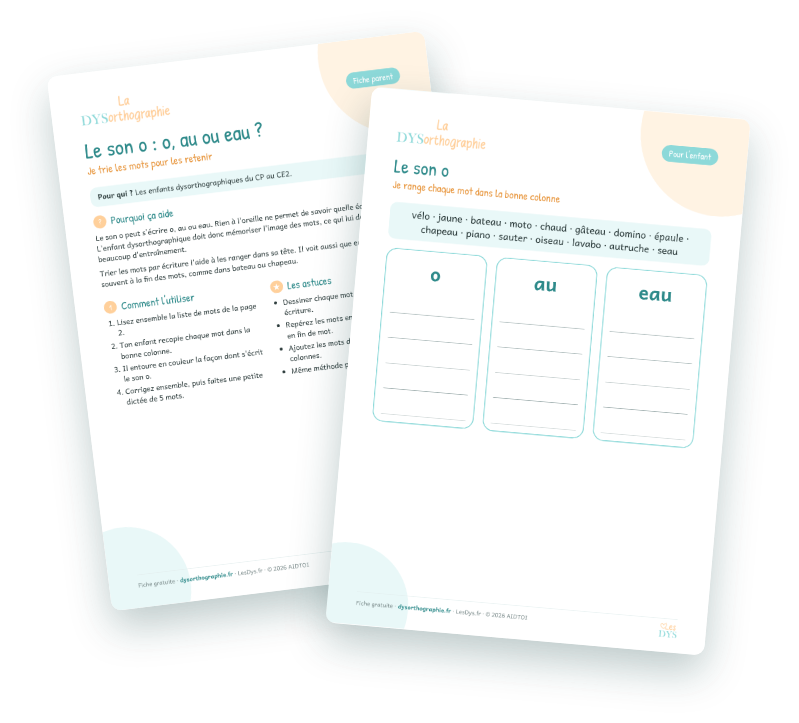
The o sound: o, au or eau?

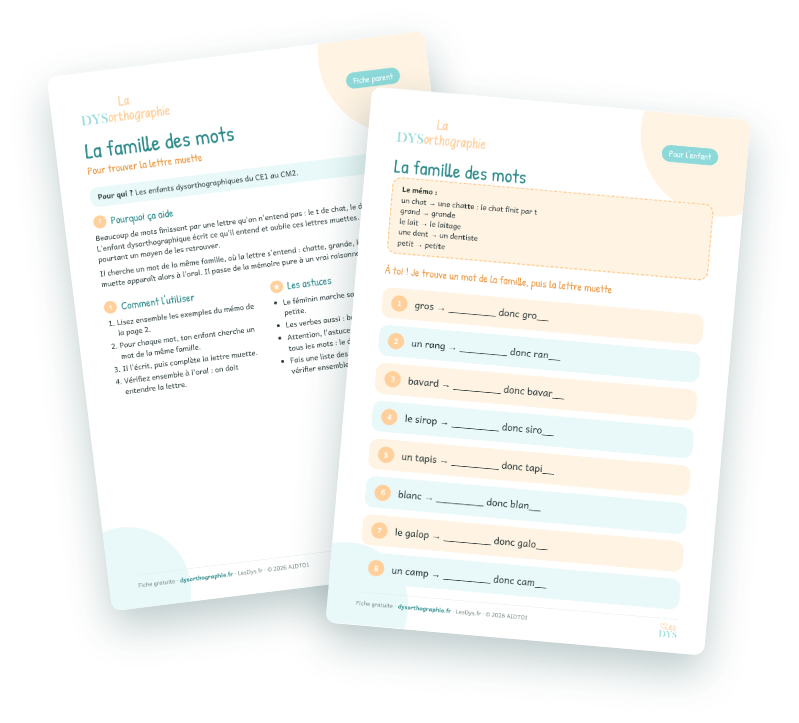
Word families

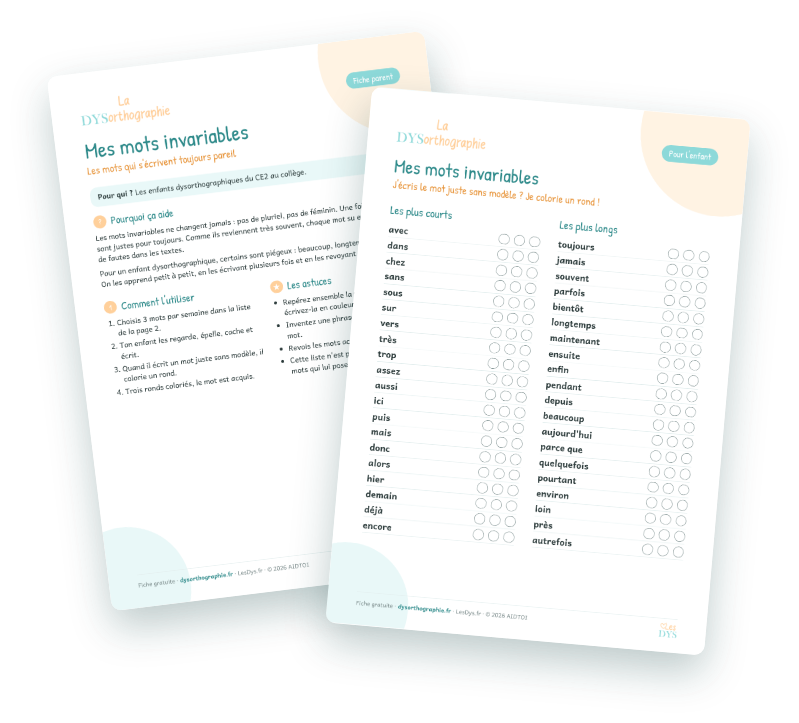
My invariable words

Manu & Ludi: Your partner in educational and teaching materials

For parents who home-educate, to explore new ways of learning, to support teachers and for adults seeking knowledge.

Download our free PDF resources

Homophones and agreements

Easy tricks to choose between two words that sound the same and never forget plural markers.

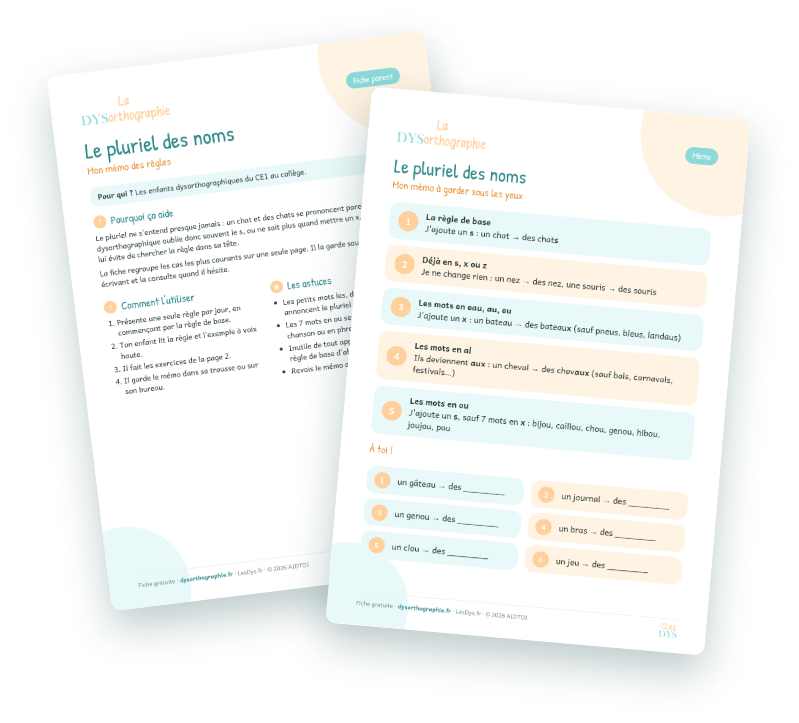
The plural of nouns

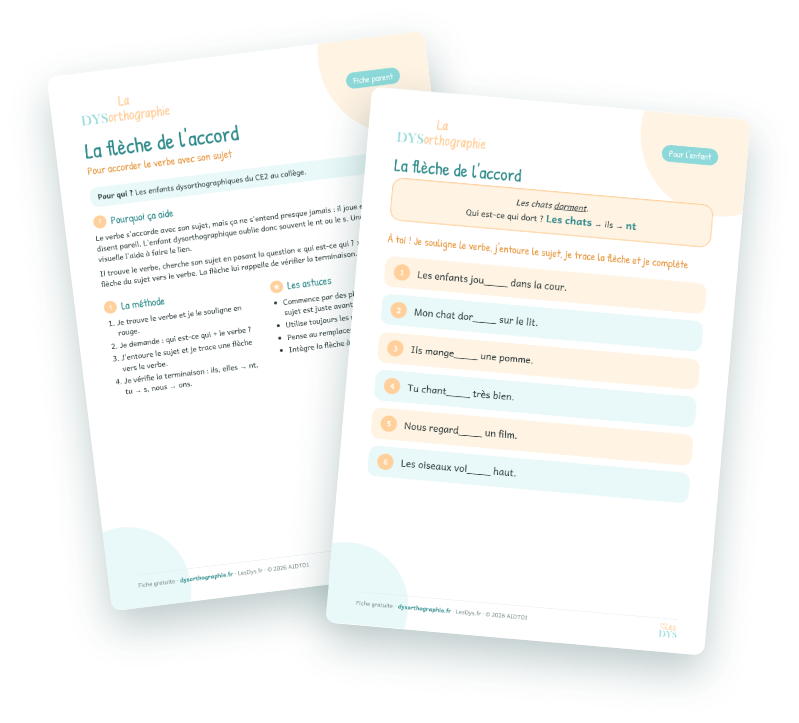
The arrow of agreement

Which sheet should you choose based on your child's age?

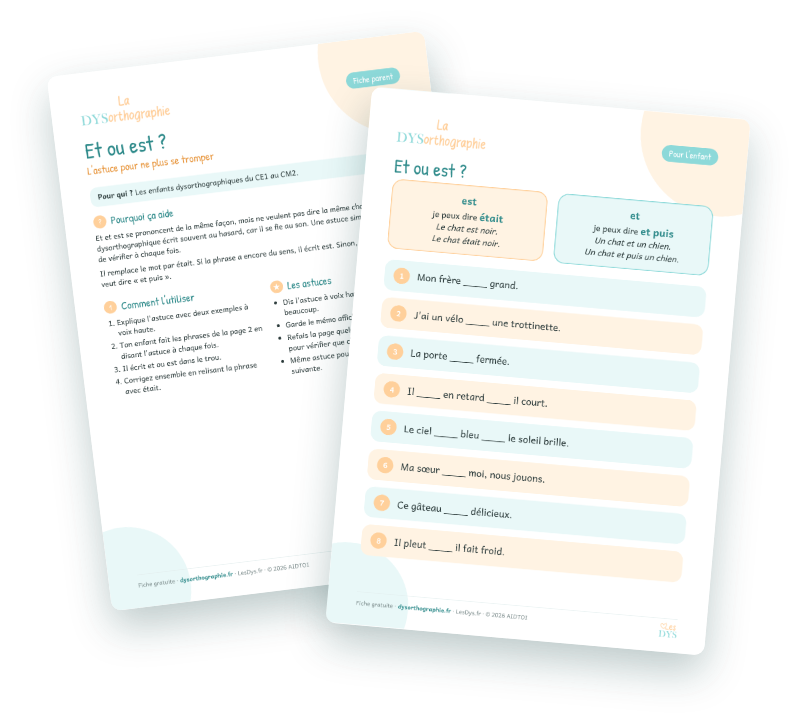
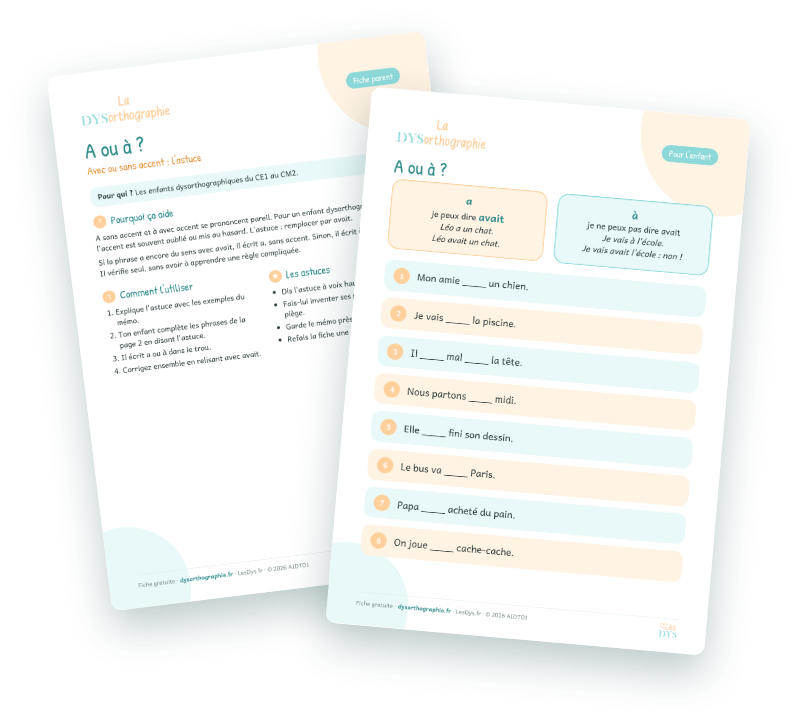
In Year 2 and Year 3 (CE1 and CE2), start with sounds and small words: the sound o, et ou est, a ou à. These sheets lay the foundations and quickly give a sense of success. The word family also helps them understand that spelling often follows a logic.

From Year 4 (CM1), agreements take up more space. The plural of nouns, the arrow of agreement and the proofreading grid support them up to secondary school. For more ideas by level, have a look at our dyslexia exercises for Year 3 or our dyslexia exercises for secondary school.

Download our free PDF resources

Write and proofread

To prepare a dictation without stress, proofread your work with a method and give the teacher the keys to support your child.

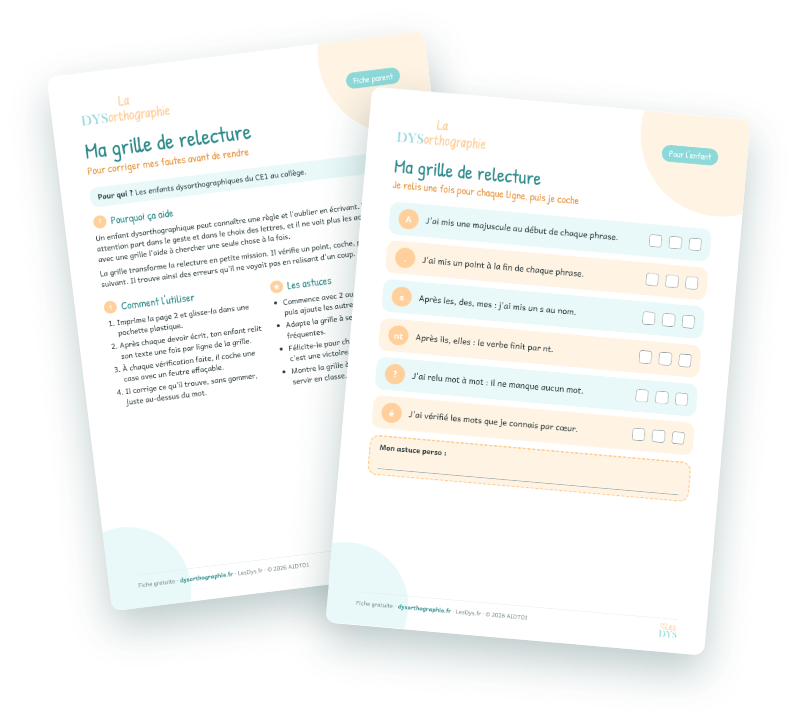
My proofreading grid

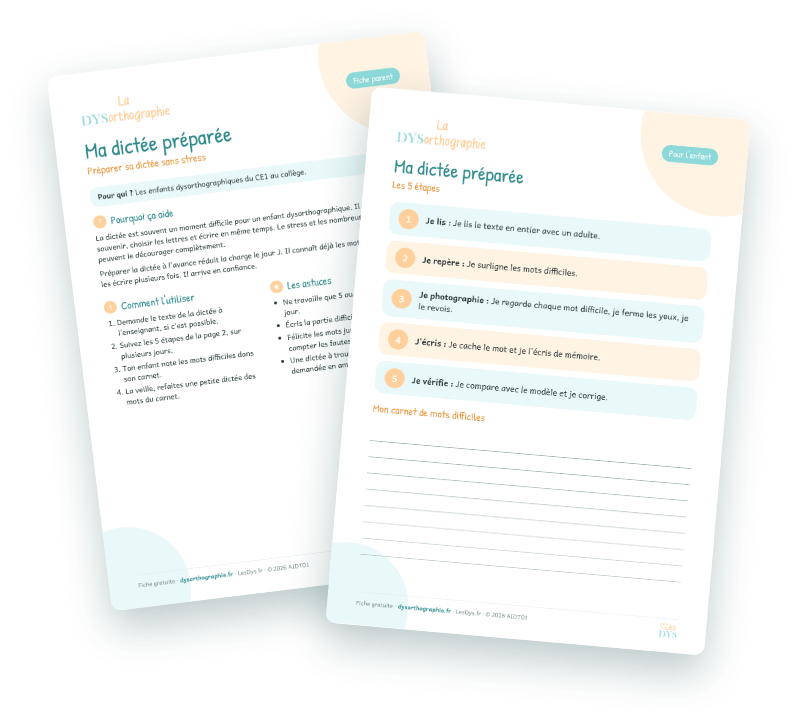
My prepared dictation

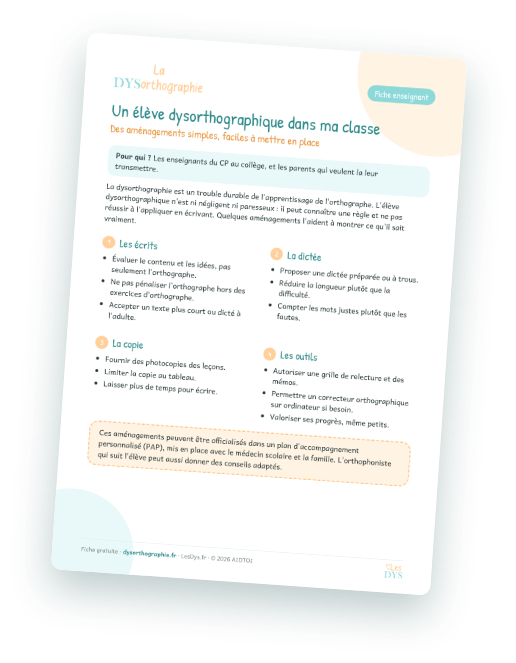
Dysorthographia pupil in class

BCD Jeux

Jeux, boutique française de jeux, jouets et activités créatives pour toute la famille.

Thought sheets for children with dysorthographia

Dysorthographia makes spelling very difficult, even when the child knows the rules. They may be able to recite the rule for plurals and forget it as soon as they write, because all their attention goes into choosing the letters. Our sheets offer simple tips and short exercises to help them apply what they already know.

Each sheet targets a specific difficulty: homophones, silent letters, agreement or proofreading. You choose the one that matches their most frequent errors. If you have any doubts, the page on the signs of dysorthographia in children will help you see things more clearly.

How do I use the sheets at home?

A little every day is better than one long session at the weekend. Ten minutes is enough, at a fixed time, when your child isn’t too tired. One tip at a time, repeated over several days, is better than three rules at once. Praise the correct words rather than counting the mistakes. Every error spotted while proofreading is a small victory. The page on dysorthographia exercises in 10 minutes a day will help you establish this routine.

Sheets to share with school and the speech and language therapist

The sheets do not replace remedial therapy, but they complement it well. Show them to your child’s speech and language therapist: they can tell you which ones to prioritise. If you are looking for a professional, the ProfessionnelsDys directory helps you find a speech and language therapist near you.

The sheet “A dysorthographic pupil in my class” is designed for the teacher. It presents simple adjustments for written work, dictation and copying. They can also be made official in a PAP for dysorthographia.

Frequently asked questions

Are the sheets really free?

Yes, all the sheets are free and can be downloaded without registration.

From what age can they be used?

Most are designed for CE1 to CM2 (Years 2 to 6). The proofreading grid, the plurals and the agreement arrow are also useful at collège (secondary school).

Do the sheets replace the speech and language therapist?

No. They are used for practice at home, alongside speech and language therapy follow-up.

Download all our free PDF resources

Each sheet contains a page of advice for you and a page to use with your child. You can print them as many times as you like and share them with their teacher or healthcare professional.

The o sound: o, au or eau?

The word family

My invariable words

Plurals of nouns

The agreement arrow

My proofreading checklist

My prepared dictation

Dysorthographia pupil in class

Discover the articles recently published

Tips, favourite finds and DYS news every week.

Subscribe, it’s right here.

Dysorthographie.fr

A media from the LesDys.fr group

The no. 1 media on DYS disorders